
What Is Stockholders’ Equity and How Do You Calculate It?

Gain hands-on experience with Excel-based financial modeling, real-world case studies, and downloadable templates. Upon completion, earn a recognized certificate to enhance your career prospects in finance and investment. If a balance sheet is not available, another option is to summarize the total amount of all assets and subtract the total amount of all liabilities. These options are the balance sheet method, the accounting equation method, and the summation of equity components method.

What is the relation between shareholders’ equity and net worth?
Understanding how it stockholders’ equity and what factors influence it will give you an idea of what other values to check when assessing a company’s financial status. The value of stockholders’ equity and the factors that influence it can give financial auditors a good deal of insight into the company’s financial performance. The following examples cash flow feature the shareholders’ equity statement and show how to calculate shareholders’ equity with respect to all the above-mentioned components. Also known as additional paid-up capital, this component counts the additional amount that shareholders pay above the actual share price. The shareholders’ equity comprises components that play an important part in determining the company’s net worth.
- The accounting term that means an entry will be made on the left side of an account.
- In simple terms, ROE tells you how efficiently a company uses its net assets to produce profits.
- On the other hand, if a company is significantly overextended with loans and other debts that’s a sign that it may be in trouble.
- When it comes to dividends and liquidation, the owners of preferred stock have preferential treatment over the owners of common stock.
- The number of issued shares is often considerably less than the number of authorized shares.
- The book value of a company is the amount of owner’s or stockholders’ equity.
- We focus on financial statement reporting and do not discuss how that differs from income tax reporting.
Alternative Method to Calculate Stockholders’ Equity

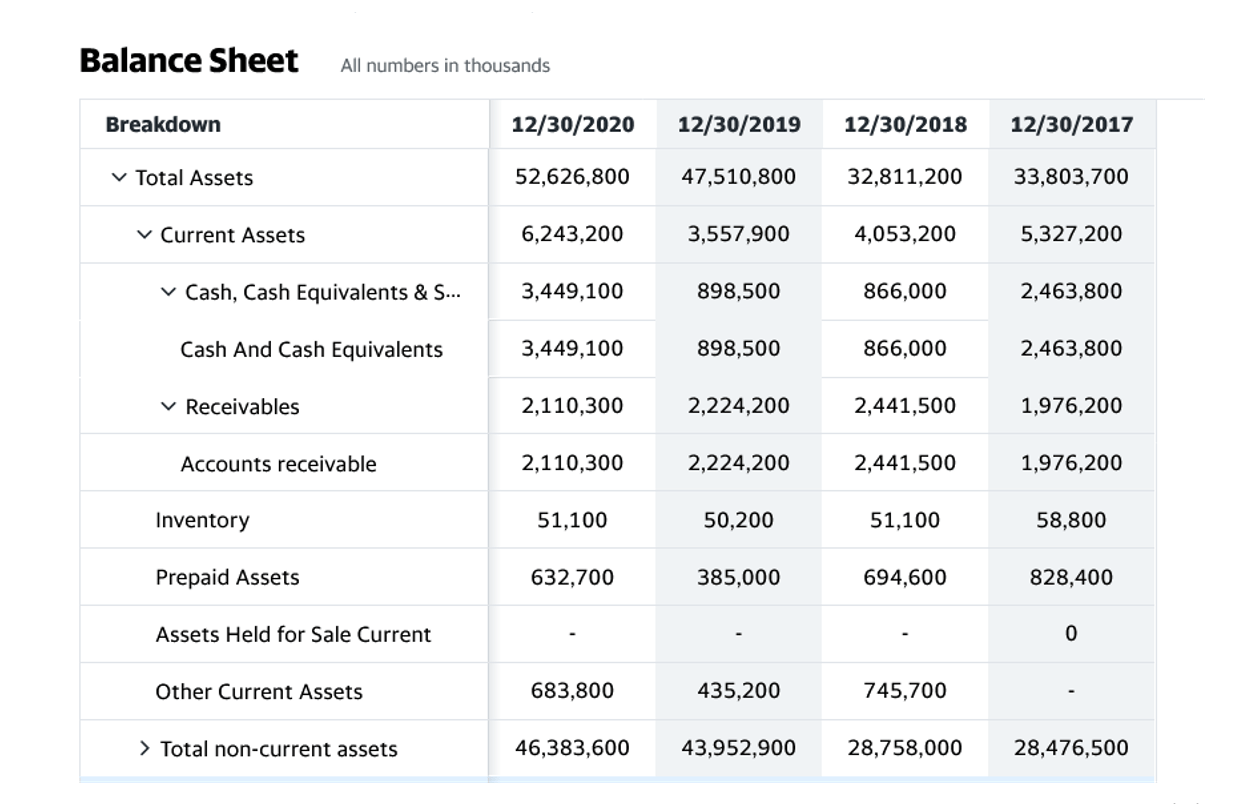
You’d need to be able to read a balance sheet to find the company’s total assets and liabilities in order to make these calculations. But overall, it’s a much less complicated formula than other calculations that are used to evaluate a company’s financial health. Total shareholders’ equity is the term used to indicate the shareholders’ equity and is calculated as the difference between the total assets and the total liabilities a company holds. statement of stockholders equity This value helps investors identify the company’s financial health and determine whether they should continue investing in it, given its performance.
Stockholders’ Equity: A Key Indicator of Company’s Value

In our modeling exercise, we’ll forecast the shareholders’ equity balance of a hypothetical company for fiscal years 2021 and 2022. After the repurchase of the shares, ownership of the company’s equity returns to the issuer, which reduces the total outstanding share count (and net dilution). Next, the “Retained Earnings” are the accumulated net profits (i.e. the “bottom line”) that the company holds onto as opposed to paying dividends to shareholders. Excluding these transactions, the major source of change in a company’s equity is retained earnings, which are a component of comprehensive income.
- On the other hand, if the difference declines, it depicts that the maturity period is around the corner, and there is no scope for further growth.
- The total liabilities referenced in the above formula represent all of a company’s current and long-term liabilities.
- Some investors may have large ownership interests in a given corporation, while other investors own a very small part.
- Stockholders’ equity (also known as shareholders’ equity) is reported on a corporation’s balance sheet and its amount is the difference between the amount of the corporation’s assets and its liabilities.
- A corporation’s accounting records are involved in stock transactions only when the corporation is the issuer, seller, or buyer of its own stock.
- The income statement shows a time period, such as a year, while the balance sheet shows a snapshot of the time it was prepared.
- While assets are the company’s resources and include everything from cash to physical items, liabilities are the debt it requires repaying.
- The return on equity gives investors an idea of how effectively a company’s management is using the money invested in it to produce profits.
- Understanding how it stockholders’ equity and what factors influence it will give you an idea of what other values to check when assessing a company’s financial status.
- Stockholders’ equity statements form part of the balance sheet in the financial statements.
- Using the average shareholders’ equity instead of either the beginning or ending value helps correct for this difference.
- Liabilities also include amounts received in advance for a future sale or for a future service to be performed.
Retained Earnings are profits left over from the net income that is not divided as dividends among shareholders. This amount is invested back into the business, for reasons like funding working capital, purchasing inventory, debt servicing, etc. The stockholders’ equity is only applicable to corporations who sell shares on the stock market. For sole traders and partnerships, the corresponding concepts are the owner’s equity and partners’ equity. These include components that are not reflected in the income statements but affect the financial health of the companies. That part of the accounting system which contains the balance sheet and income statement accounts used for recording transactions.

This account is then closed to the owner’s capital account or a corporation’s retained earnings account. This and other summary accounts can be thought of as a clearing account. Also a stockholders’ equity account that usually reports the cost of the stock that has been repurchased.
Related Terms
For example, if a company has $80,000 in total assets and $40,000 in liabilities, the shareholders’ equity is $40,000. Preferred stock where past, omitted dividends do not have to be paid before a dividend can be paid to common stockholders. In the case of noncumulative preferred stock, only its current year dividend needs to be paid in order for a corporation to pay a dividend to its common stockholders. For example, assume that a corporation has 100,000 shares of $0.50 par value common stock before a 2-for-1 stock split.
Accounts Payable
In short, the asset value can be calculated by adding the firm’s equity and total debt or liabilities. The easiest approach is to look for the stockholders’ equity subtotal in the bottom half of a company’s balance sheet; this document already aggregates the required information. Generally a long term liability account containing the face amount, par amount, or maturity amount of the bonds issued by a company that are outstanding as of the balance sheet date. A document that discloses important information on bonds or preferred stock.
Positive stockholder equity can indicate that a company is in good financial health, while negative equity may hint that the company is struggling or overextended with debt. Stockholders’ equity is typically included on a company’s balance sheet but it’s possible to calculate it https://www.mhalarmes.com/hillsboro-or-anything-everything-quickbooks/ yourself. For example, let’s say you generate a positive after-tax net income one year. The net income is represented in both the statement of cash flow and the statement of retained earnings.